


Hannah Gallop
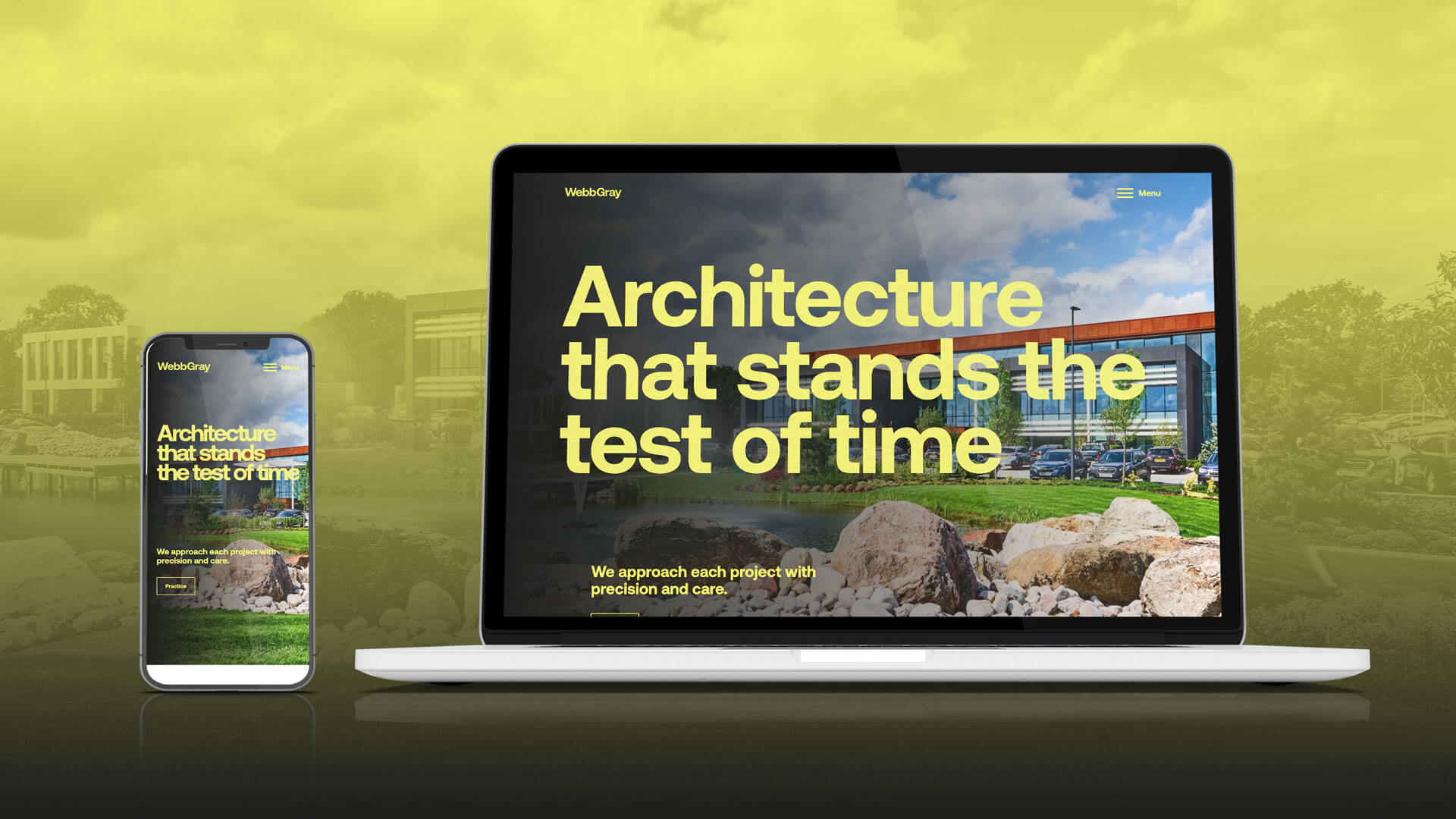
“Bespoke” gets used a lot in web design. Too often, it becomes shorthand for something vague or overcomplicated. For us, it has a very practical meaning.
A bespoke website is one designed and built around a specific organisation, its audience and what functionality it needs. Not adapted. Not forced into a framework. Built with intent from the outset.
As Katie, our Digital Project Director, puts it: “Bespoke starts with the problem you’re trying to solve, not the platform you’re going to use. The website should fit the business and their audience, not the business bending to fit the site.”
That approach changes everything. Instead of opening a theme library and choosing a layout that someone else already has, we start by asking questions. Who is using the site? What are they trying to achieve? Where does the site need to work hardest? The answers shape the structure, the content flow, the design and the functionality.
Those answers inform everything that follows, from structure and content flow to design and functionality.
Website templates serve a purpose. For new businesses, short-term campaigns or projects with very limited requirements, they can be a sensible option. But problems tend to surface as organisations evolve.
Templates are designed to be broadly useful, not deeply specific. They rely on assumptions about behaviour, generic page structures and bundled functionality that may or may not be relevant.
You can customise a template, but only within the limits of someone else’s decisions. Over time, that leads to friction. Navigation that feels slightly off. Page layouts that don’t suit the content. Features you don’t need slowing things down, while the ones you do need are missing.
Those compromises often start quietly, then become structural and potentially business critical.
“Eventually, teams start adjusting their content or processes to suit the site,” Katie explains. “That’s usually the point where it’s working against you rather than for you, which can become costly.”
Building from scratch removes those constraints because every element exists for a reason. Nothing is there by default or “just in case”.
That means thinking about real journeys, real decisions and real behaviour, rather than forcing content into pre-made layouts. A custom build also allows the CMS to be tailored around how the client actually works, making it easier to update content and far more effective for search engine performance.

Accessibility and performance are built in from the beginning, not treated as fixes further down the line. Templates can be bulky and plugin-heavy, which often slows sites down and limits flexibility. Custom code keeps things lean, fast and purpose-driven.
“Accessibility isn’t something we retrofit,” says Katie. “When it’s considered from day one, the site is simply clearer and easier for everyone to use.”
A bespoke build also gives you room to move. As priorities change or new needs emerge, the site can evolve without you having to work around structural limitations.
And without being tied to preset components, the design can properly reflect the organisation behind it, rather than the framework it was built on.
At Barques, we design and build websites in-house because it allows strategy, design and development to move together, rather than in sequence.
“Keeping everything under one roof means fewer trade-offs,” says Katie. “Decisions are made with a full understanding of both the creative intent and the technical reality.”
Our focus is on how websites are used in real conditions, not ideal ones. That’s why clarity, accessibility and user experience sit alongside visual impact and search performance.

We build bespoke WordPress websites that are robust, practical and thoroughly tested. Sites that are straightforward to manage day to day, but capable of supporting growth over the long term.
“The aim isn’t to build something flashy for its own sake,” Katie adds. “It’s about creating something that does its job properly now, and still makes sense years down the line.”
If your site no longer reflects your business, or you’re starting to work around its limitations, it may be time for a different conversation about what it needs to do next. Let’s talk if your website could do with a refresh.