


Hannah Gallop
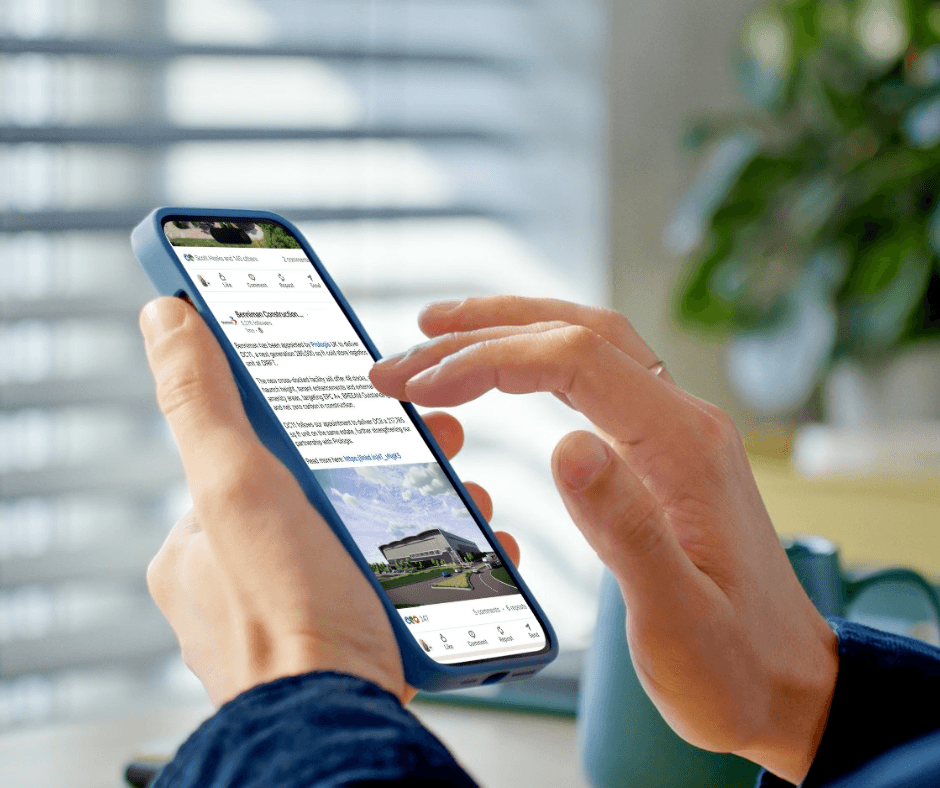
We’re trusted to manage the LinkedIn company pages of organisations across a wide range of sectors, and increasingly, we’re also supporting senior leaders and executives with their personal LinkedIn presence. That includes shaping content strategy, writing copy, and creating the images and videos that sit alongside it.
So what we see day to day is not just how LinkedIn can work, but how it actually works for busy professionals.
Most professionals have a LinkedIn account because, at some point, it stopped being a choice. It became something you were expected to have, even if you rarely used it or were never quite sure what to do with it.
At the same time, LinkedIn can feel pretty intimidating if it’s full of strong opinions, highly polished posts and people who seem to have far more time and energy for it than most. For many professionals, it starts to feel less like a place to learn or connect and more like a stage. That is often the point where you may begin to step back.
A lot of the advice around LinkedIn will assume you want to post all the time, build an audience, or turn yourself into a content creator. Meanwhile, most professionals simply want to look credible, stay visible, and make sure their LinkedIn presence supports the work they are already doing.
But when LinkedIn is used well, it’s not about posting every day and saying more, it’s about showing up in the right way, to the right people, at the moments that matter.
Long before a proposal is sent or a meeting is booked, people will usually conduct their own research. Clients, referrers and potential partners want a sense of who you are and how you think before deciding whether to engage.
LinkedIn’s own research shows that 82% of buyers look at a person’s profile before agreeing to connect, and 89% of top sales professionals say social platforms play a part in closing deals. In reality, that means LinkedIn is often where those first impressions are formed.
On the platform, this research can be conducted in two main ways: through a company page and through the personal profiles of the people behind the business.
A company page is the official presence of a business. It is useful for sharing updates, promoting services and outlining what the organisation does. In practice, company page posts tend to reach a relatively small proportion of followers unless they are actively promoted or widely shared.
A personal profile belongs to an individual. When someone posts, comments or shares content from their profile, it is delivered directly into the feeds of their connections. This content is generally seen more often and carries more weight because it comes from a named person rather than a company as a whole.
People do business with people, not logos. That sounds obvious, but it is easy to forget when most marketing effort goes into business-level activity.
A personal LinkedIn profile gives context that a company page cannot. It shows experience, judgement, tone and credibility in a way that feels human rather than promotional. When someone sees a post from an individual they recognise, it lands differently to a corporate update, even if the message is similar.
This matters commercially because trust is rarely built at the point of sale. It is formed earlier, often passively. By the time someone reaches out, they may already have a sense of how you think, what you care about and whether you feel credible.
Research consistently supports this. LinkedIn’s own data shows that people are significantly more likely to engage with content shared by individuals than by brands, and Edelman’s Trust Barometer has repeatedly found that “a person like me” and subject-matter experts are trusted more than corporate spokespeople. Personal presence does not replace a strong brand, but it often carries the deciding influence.
You don’t need to post every day, you don’t need a content calendar, and you don’t need to chase engagement for its own sake. Unless you want to, of course. But effective LinkedIn posting for most professionals is occasional, relevant and grounded in real work.
A useful rule of thumb is to post when you actually have something to add, not when you feel you should. This might include:
The most effective posts tend to be specific. They reference real situations, real decisions and real learning. They do not try to cover everything or appeal to everyone as clarity beats cleverness.
Consistency matters more than frequency. Posting once or twice a month, thoughtfully, is often more effective than posting daily with little substance.
LinkedIn rarely delivers instant results as its value is cumulative.
Most business development does not start with a pitch. It starts with familiarity. When your name appears repeatedly in someone’s feed in a way that feels relevant and credible, it lowers the barrier to future conversations.
This shows up in subtle ways. Someone accepts a meeting more readily. A referral feels more confident. A prospect mentions they have “seen a few of your posts”. None of this is accidental.
LinkedIn activity also supports the work done elsewhere. It reinforces proposals, presentations and conversations by giving people somewhere to validate their decision. In many cases, your profile is read after a meeting, not before. A neglected or unclear presence can quietly undermine otherwise strong work.
There are a few common habits that actively work against credibility.
Posting purely to game the algorithm is one. Overly generic advice, exaggerated emotion and recycled opinions are easy to spot and easy to ignore.
Another common mistake is using LinkedIn like a personal diary. Being authentic is important, but it still needs to be relevant. If a post has no real link to your work, your perspective or the people you want to reach, it is unlikely to do much for you professionally.
Finally, saying nothing at all can also send the wrong message. An empty or outdated profile can make it look like you are disengaged, even when you are not. You do not need to post all the time, but your presence should still feel current and deliberate.
It can feel like a fine line to walk, but it is usually simpler than it seems. It’s all about ensuring your activity reflects the work you do, the experience you have and the people you want to connect with.
The biggest mistake people make is assuming LinkedIn needs daily attention. When really, a manageable approach to it could look more like this:
The key takeaway is that LinkedIn works best when it supports your work, not when it competes with it.